The work presented stems from a journey, let’s say a pilgrimage to Venice by bicycle.
1, 416miles cycled, 244 stones and 800ml water collected and carried en route are contained within these works.
The work presented here is one of a multiplicity of traces of a solo bicycle ride from London to Venice.
Why, you ask would you cycle to Venice or in fact any such distance by bicycle. I can’t give you all if any of the answers but everything needs personal rhyme and reason to be achieved.
Venice was, is, will be a mythical city so described by Italo Calvino in Invisible Cities. It was the first place, which I ever took a plane to get to and it captivated my imagination in all of it’s fading splendour. In this sense I recall it being a far away, a place that I had dreamt about but had never seen. I was guided around by an Italian painter and cyclist named Armando. He and his wife insisted that my Baedeker remain at home and that I should feel my way through the labyrinth. It seemed appropriate to relive this dream, this memory and to really grasp it and to anticipate it I had to cycle there and get lost doing so.
A mere 1,416 miles, a ferry crossing, 2 punctures, unknown altitude climbed, a snow storm, several mountain passes, the föhn and a slightly dented sense of humour later I arrived after 18 days on the road. The route was indirect, as it seems important to meander and get lost when going from X to Y, as you never know what you might learn.
Upon the way I collected rocks from the landscape through which I passed. The rock, a completely tangible article, which relentlessly surrounds us as an intangible landscape.
A landmass, a territory, a piece of time, a source of pigment.
The rocks map the journey and they themselves have traveled. They trace the memory of an event. Every rock has been carried along the way for a portion of the journey by sheer cycling man-power in an ever heftier pannier and then posted to make its own way back to the UK.
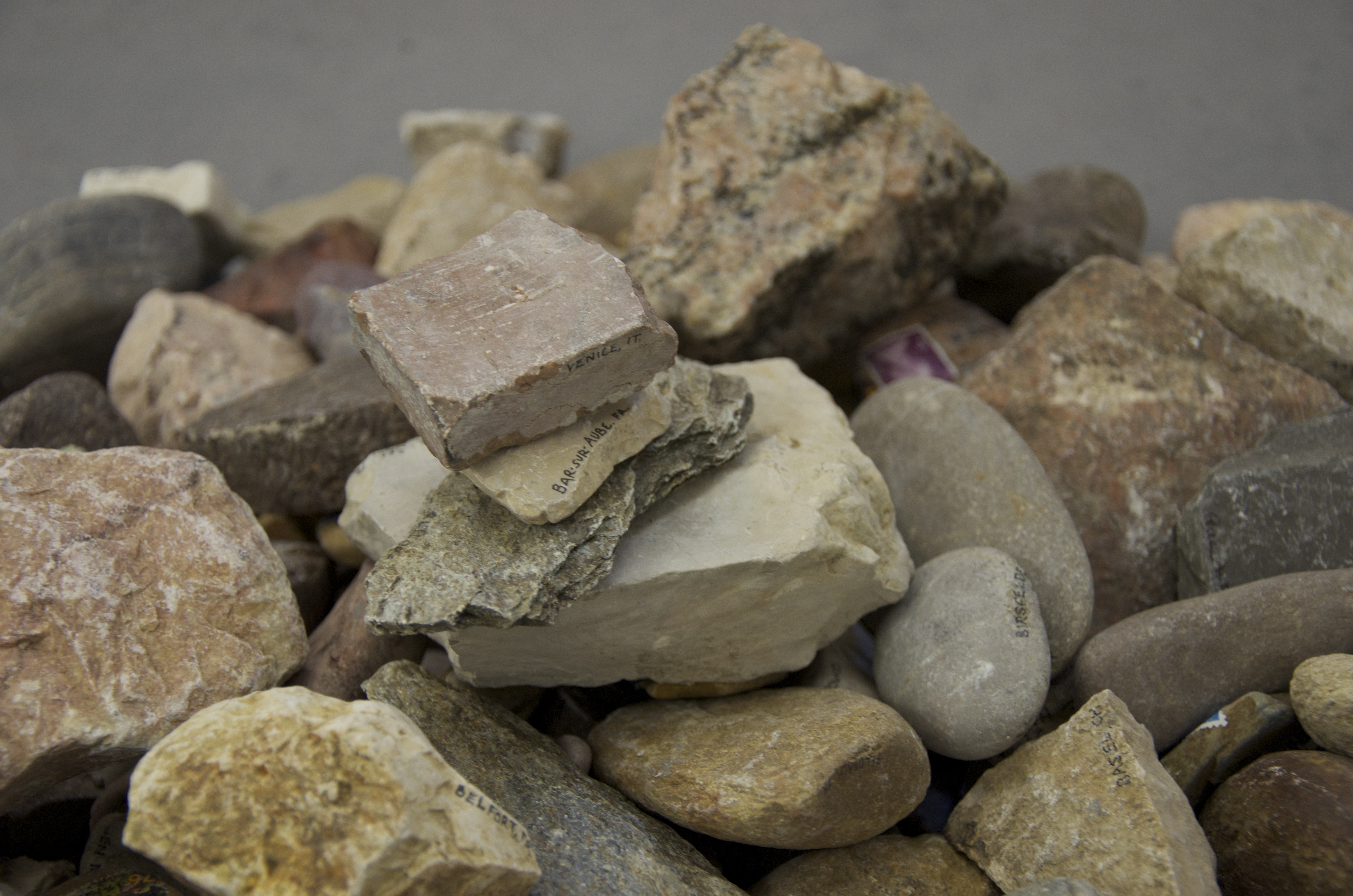
Each rock has a specific location written upon it from where it was collected.
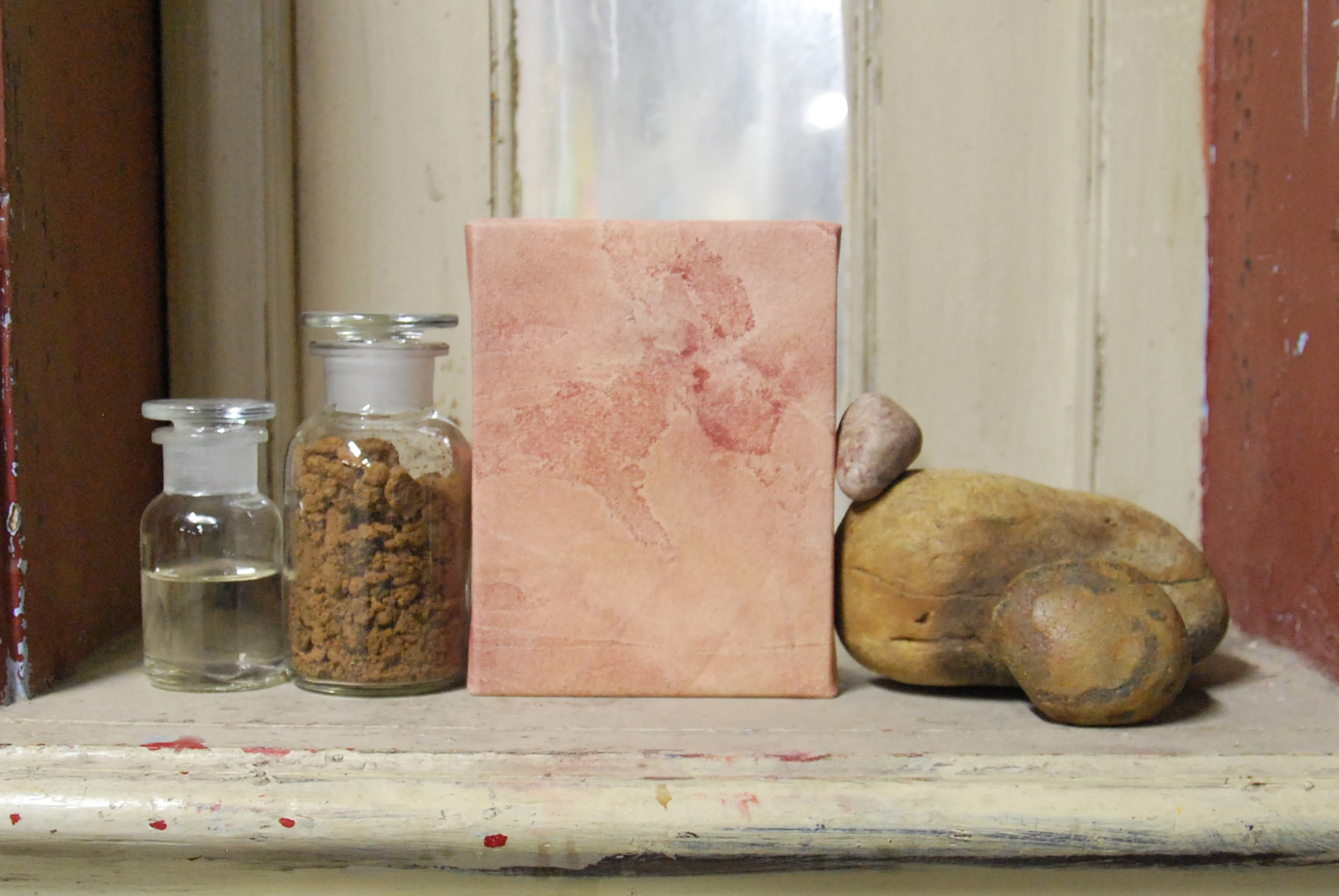
I also collected water from various places en route an have made some small water-colour paintings also earth pigment based.
On my return to the UK I consolidated this notion of travel into several different forms:
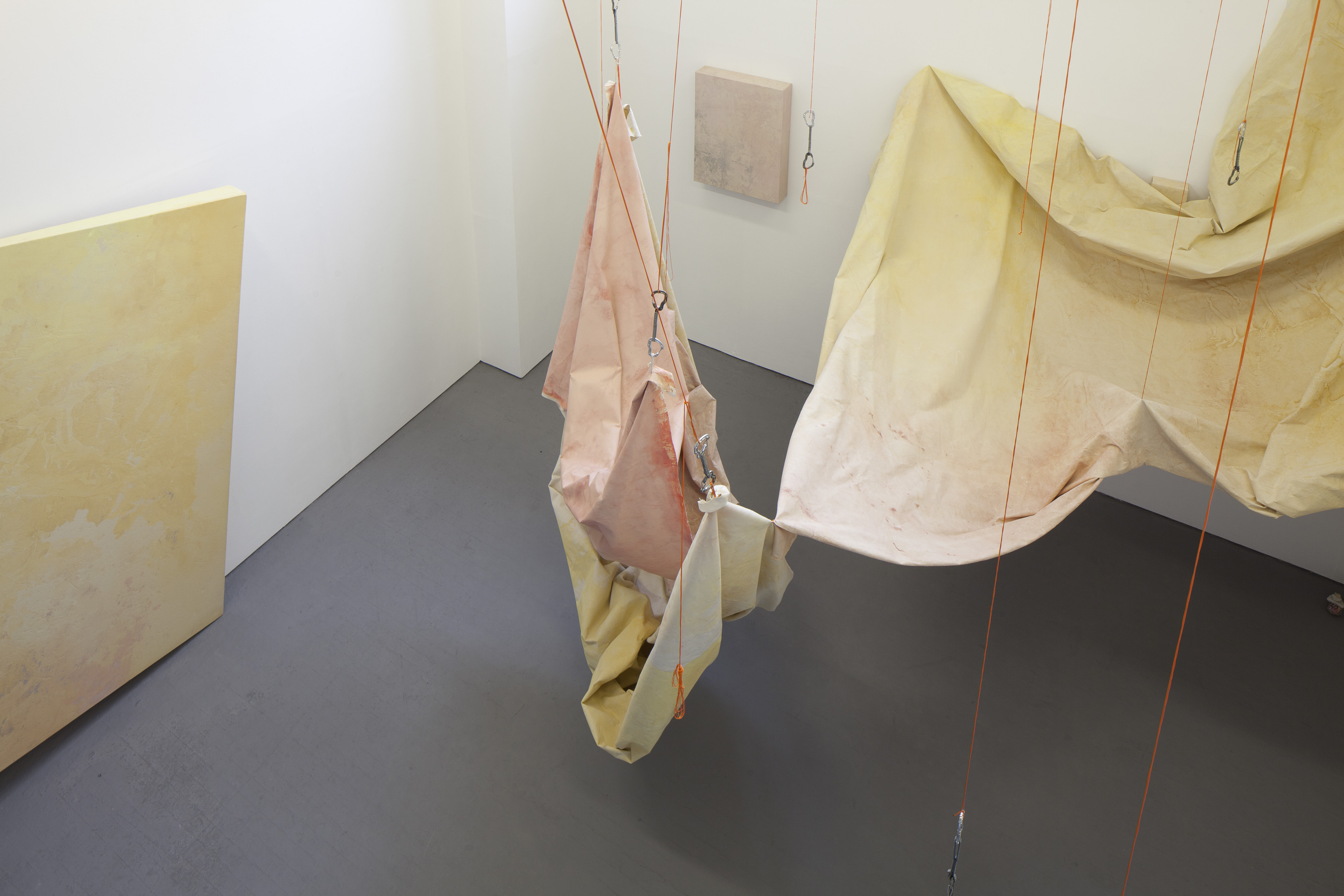
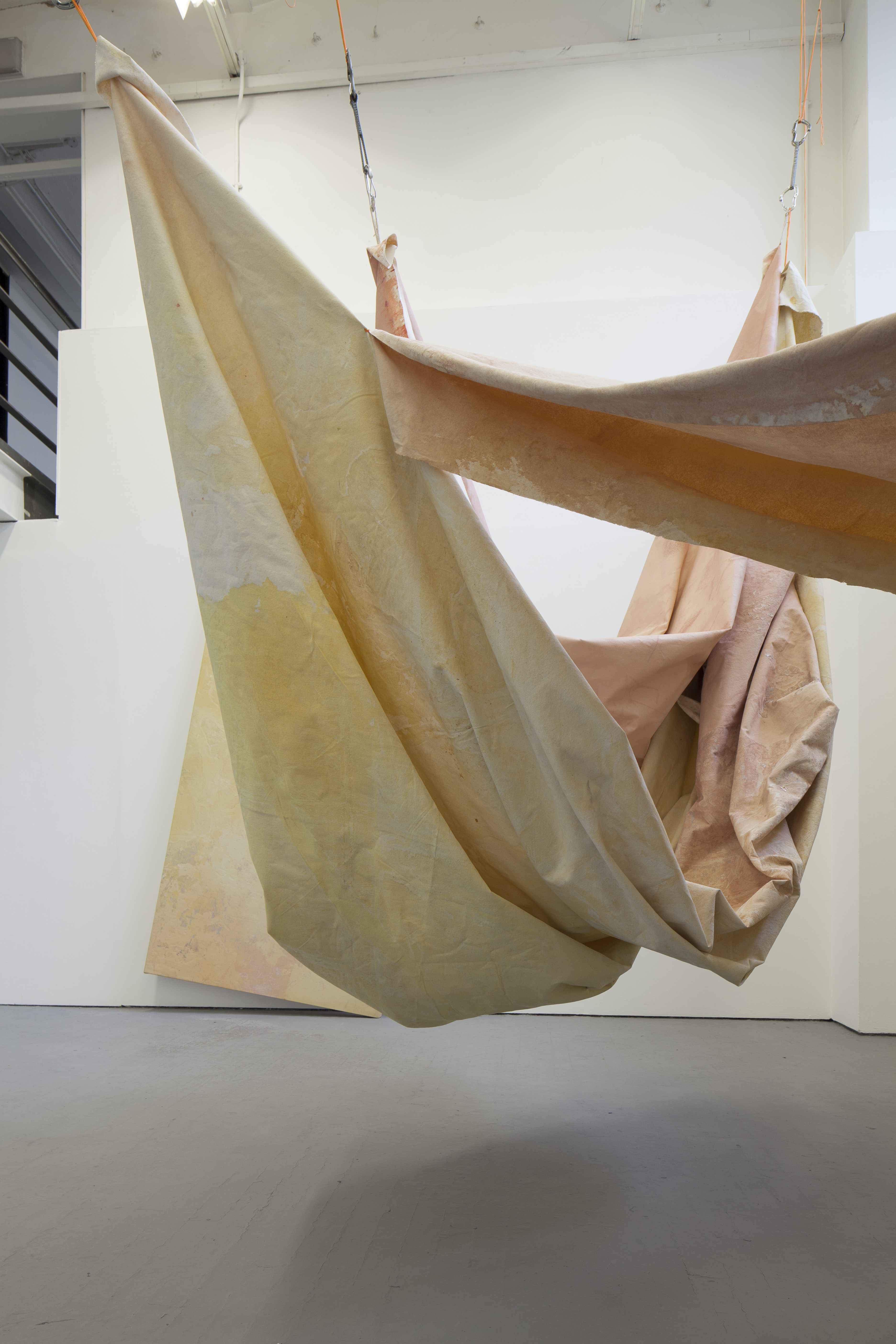
The installation ‘If It Was Easy It Wouldn’t Be Hard’ 1,416 miles. A journey from London to Venice by bicycle, made with earth pigments.
The pieces of rock as a cairn ’244 Rocks Later’ . All of these rocks were collected en route and posted as noted.
A collection of water-colour paintings made with pigment and water from the journey to Venice. Shown for the degree show are 4 quiet water-colours which represent one from each country passed through (UK, France, Switzerland and Italy)
A series of photographs of the rocks as C-Type prints made with the medium format camera. One is exhibited at the degree show.
This piece of work continues to evolve…without the Baedeker.

- This is part of my degree show installation in the domain of the expanded field of painting. The canvases are all made from Italian earth pigments and have been installed to suggest one of many possible becomings.

- Degree show install (2012)

- An elevated view of the degree show. Just as with any physical landscape this painting could be viewed from many positions with the changing light through-out the day. There is sense of viewing, but also the quick draw climbing clips suggest a notion of constant change and physically being at one with a landscape. It feels like a moments pause before the next possibility.
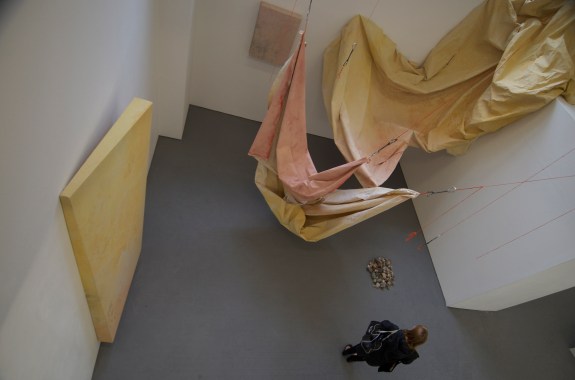
- Another elevated view including a viewer for scale.

- A moment of tension; pushing, pulling, resting, leaning, kissing, holding, being.

- The Cairn in situ. Every Rock has written upon it a specific location from either the UK, France, Switzerland or Italy. These pieces of landscape trace the cycle to Venice to specific locations upon the way. Each rock was carried for various amounts of time and then when opportunity occurred was posted back to Slade and so making its own journey.
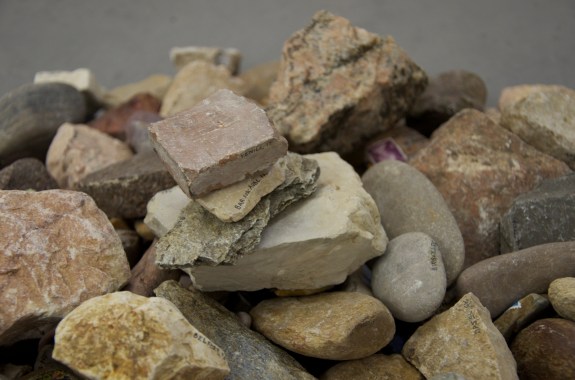
- Venice balanced on the top of the Cairn






 Sam Mould Painting